Feeling drained, mentally foggy, or physically exhausted has become a common complaint in modern life. Long work hours, poor sleep, stress, and dietary imbalances all contribute to chronic fatigue. While caffeine and energy drinks offer temporary stimulation, they often lead to crashes and dependency.
Herbs to boost energy naturally provide a safe, sustainable alternative. These herbs enhance cellular energy production, support stress adaptation, and improve mental and physical performance. By harnessing nature’s power, it is possible to maintain steady vitality throughout the day without relying on synthetic stimulants.
In this article, we explore the most effective energy-boosting herbs, their mechanisms of action, scientific evidence, safe usage, and practical ways to integrate them into daily life for sustained mental and physical energy.
Understanding Fatigue and Energy Balance
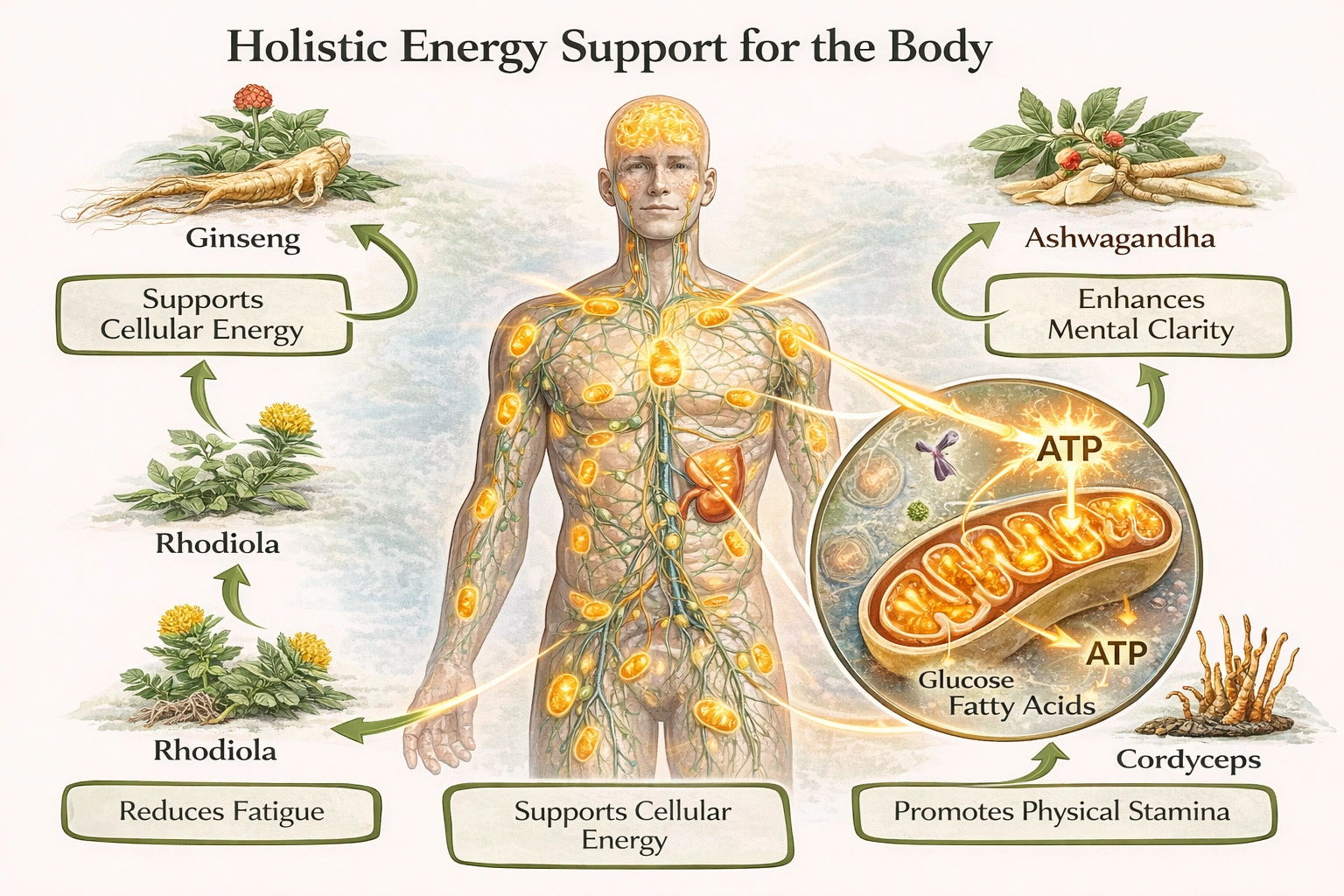
Fatigue occurs when energy production fails to meet the body’s demands. Mitochondria, the cellular “powerhouses,” generate energy from nutrients. Chronic stress, inflammation, nutrient deficiencies, and poor sleep impair mitochondrial function, leading to low energy and reduced mental clarity.
Herbs for energy naturally enhance mitochondrial efficiency, reduce oxidative stress, and support adrenal and nervous system function. Unlike stimulants, they provide balanced, sustained energy, avoiding spikes and crashes.
Causes of Chronic Fatigue and How Herbs Help
Chronic fatigue can result from several factors:
- Stress-induced fatigue: Prolonged stress depletes adrenal function and cortisol balance, reducing energy. Adaptogenic herbs like rhodiola and ashwagandha support stress resilience.
- Mitochondrial inefficiency: Poor nutrient utilization and oxidative stress impair energy production. Ginseng, maca, and cordyceps enhance mitochondrial function and ATP production.
- Mental fatigue: Cognitive load, sleep deprivation, and oxidative stress reduce alertness. Herbs like rhodiola, ginseng, and eleuthero support mental clarity.
- Physical fatigue: Overexertion, poor circulation, and nutrient deficiencies lead to sluggishness. Herbs stimulate circulation, reduce oxidative stress, and improve endurance.
Key Herbs to Boost Energy Naturally
Ginseng
Ginseng (Panax ginseng) is a renowned adaptogen that enhances both physical and mental energy. Its ginsenosides improve mitochondrial activity, reduce fatigue, and enhance cognitive performance. Clinical studies indicate improved endurance, reaction time, and mental clarity with ginseng supplementation.
Rhodiola Rosea
Rhodiola supports stress adaptation, reduces mental fatigue, and enhances endurance. Its active compounds, rosavins and salidroside, optimize mitochondrial function, protect against oxidative stress, and improve neurotransmitter activity, boosting alertness and focus.
Ashwagandha
Ashwagandha is an adaptogen that improves energy by balancing cortisol levels, reducing stress-induced fatigue, and enhancing endurance. It also promotes mental clarity and physical stamina during prolonged mental or physical activities.
Maca Root
Maca (Lepidium meyenii) is rich in bioactive compounds that enhance stamina, reduce fatigue, and improve overall vitality. It supports hormonal balance, particularly in stress and adrenal function, contributing to sustainable energy.
Cordyceps
Cordyceps is a medicinal mushroom that enhances ATP production, improves oxygen utilization, and boosts endurance. It supports immune function while naturally increasing physical energy and reducing fatigue.
Eleuthero (Siberian Ginseng)
Eleuthero enhances physical and mental performance, supporting energy metabolism and stress adaptation. It improves resistance to fatigue and promotes steady, long-lasting vitality.
Mechanisms Behind Herbal Energy Support
Herbs boost energy through multiple physiological pathways:
- Mitochondrial support: Ginseng, rhodiola, cordyceps, and maca enhance ATP production, increasing cellular energy.
- Stress modulation: Adaptogens like rhodiola and ashwagandha regulate cortisol, preventing stress-induced energy depletion.
- Neurotransmitter regulation: Herbs influence dopamine, serotonin, and norepinephrine, improving mental alertness, motivation, and focus.
- Circulation improvement: Ginseng and cordyceps enhance oxygen delivery to muscles and brain, sustaining physical and mental stamina.
- Antioxidant protection: Herbs reduce oxidative stress, preventing cellular fatigue and supporting long-term energy production.
Practical Ways to Use Energy-Boosting Herbs
Herbs can be incorporated safely into daily routines in several ways:
- Teas and infusions: Ginseng, rhodiola, and ashwagandha can be consumed as herbal teas to provide gentle stimulation.
- Tinctures and extracts: Concentrated forms provide higher potency for stress adaptation and sustained energy.
- Powders: Maca and cordyceps powders can be added to smoothies or meals for consistent intake.
- Capsules: Standardized herbal extracts ensure reliable dosing and effectiveness.
Moderation, quality, and observing your body’s response are essential for safe and effective herbal support.
Combining Herbs with Lifestyle Practices for Optimal Energy
Herbal energy support is most effective when paired with lifestyle strategies:
- Quality sleep: Deep, restorative sleep allows for mitochondrial repair and hormone balance.
- Balanced nutrition: Adequate protein, healthy fats, and micronutrients fuel energy metabolism.
- Regular exercise: Moderate physical activity enhances circulation, oxygen delivery, and mitochondrial efficiency.
- Stress management: Meditation, mindfulness, and adaptogens reduce fatigue caused by chronic stress.
- Hydration: Proper water intake supports metabolic processes and energy production.
Integrating herbs with these habits promotes steady, sustainable energy and overall vitality.
Scientific Evidence Supporting Energy-Boosting Herbs
Research validates the effectiveness of these herbs in improving energy and reducing fatigue:
- Ginseng: Enhances cognitive performance, physical stamina, and reduces mental fatigue (Kennedy & Scholey, 2003).
- Rhodiola Rosea: Reduces stress-related fatigue and enhances endurance and alertness (Spasov et al., 2000).
- Ashwagandha: Improves endurance, reduces cortisol, and supports energy metabolism (Chandrasekhar et al., 2012).
- Maca: Increases stamina, reduces fatigue, and supports hormonal balance (Gonzales et al., 2001).
- Cordyceps: Improves ATP production, oxygen utilization, and physical performance (Holliday et al., 2004).
- Eleuthero: Enhances physical and mental performance under stress (Panossian & Wikman, 2010).
These studies support herbs as safe, natural, and effective solutions to enhance energy and reduce fatigue.
Sustain Energy Naturally with Herbal Support
Herbs to boost energy naturally provide a safe, sustainable alternative to stimulants. By incorporating ginseng, rhodiola, ashwagandha, maca, cordyceps, and eleuthero into daily routines, alongside proper sleep, nutrition, hydration, exercise, and stress management, individuals can achieve sustained mental and physical vitality.
Moderation, high-quality herbs, and observation of personal responses are essential for safe and effective use. Herbal energy support offers a natural strategy for overcoming fatigue, improving focus, and enhancing overall wellness.
🔬 Scientific References
- Kennedy, D. O., & Scholey, A. B. (2003). Ginseng: Potential for the enhancement of cognitive performance and mood. Phytotherapy Research, 17(4), 301–313.
- Spasov, A. A., Wikman, G., Mandrikov, V., Mironova, I., & Neumoin, V. (2000). Rhodiola rosea SHR-5 extract reduces fatigue and improves mental performance under stress. Phytomedicine, 7(2), 85–89.
- Chandrasekhar, K., Kapoor, J., & Anishetty, S. (2012). A prospective, randomized double-blind, placebo-controlled study of safety and efficacy of Ashwagandha root extract in improving stress and cognitive function. Journal of Alternative and Complementary Medicine, 18(5), 402–408.
- Gonzales, G. F., Cordova, A., Vega, K., Chung, A., Villena, A., & Gonez, C. (2001). Effect of Lepidium meyenii (Maca) on sexual desire and energy in healthy men. Andrologia, 33(6), 367–372.
- Holliday, J., Cleaver, M., & Loomis-Powers, M. (2004). Cordyceps militaris: Biological activities and potential energy enhancement. Journal of Alternative and Complementary Medicine, 10(5), 823–829.
- Panossian, A., & Wikman, G. (2010). Effects of adaptogens on the central nervous system and the molecular mechanisms associated with stress. Pharmaceuticals, 3(1), 188–224.