

Digestive discomfort is a common problem affecting millions of adults worldwide. Bloating, gas, indigestion, and irregular bowel movements are not only uncomfortable but can affect energy levels, mental focus, and overall quality of life. While medications are available for temporary relief, many people prefer natural approaches that support long-term gut health.
Herbs have been used for centuries to promote digestion, soothe irritation, and maintain balance within the digestive system. From chamomile and peppermint to ginger and fennel, certain plants contain bioactive compounds that interact with the gastrointestinal tract in beneficial ways.
This article explores herbs for digestion, reviewing their mechanisms, effectiveness, safety considerations, and practical ways to incorporate them into daily life. By the end, you will understand how to use herbal remedies to naturally support digestive comfort, nutrient absorption, and gut health.
Understanding Digestive Health and the Role of Herbs
The digestive system is a complex network involving the stomach, intestines, liver, pancreas, and gallbladder. Its primary functions are breaking down food, absorbing nutrients, and eliminating waste efficiently. Imbalances in gut bacteria, inflammation, or sluggish digestive processes can lead to discomfort and systemic health issues.
Herbs support digestion in multiple ways. Some stimulate the production of digestive enzymes or bile, which aids nutrient absorption. Others have carminative properties, reducing gas and bloating. Certain herbs possess mild anti-inflammatory or antimicrobial effects, promoting a healthy gut lining and microbiome balance.
Unlike pharmaceutical drugs that typically target one symptom, herbs often work holistically, affecting multiple pathways to restore natural digestive function. This approach can be gentler, especially for long-term use.
Common Digestive Complaints and How Herbs Can Help
Digestive discomfort can manifest in many ways, including bloating, gas, constipation, indigestion, heartburn, and nausea. Each issue may require a slightly different herbal approach:
Bloating and Gas: Herbs like peppermint and fennel have long been used as carminatives, relaxing intestinal muscles and allowing trapped gas to pass more easily. Ginger also reduces bloating by improving gastrointestinal motility.
Indigestion and Heartburn: Chamomile and slippery elm are soothing herbs that help reduce inflammation in the stomach lining, promoting comfort after meals. Licorice root, when used carefully, can also support gastric health.
Constipation and Irregularity: Senna, aloe, and cascara sagrada have mild laxative effects, promoting regular bowel movements. Gentler options like peppermint tea can stimulate intestinal movement without strong stimulant effects.
How Herbs Support Gut Health Mechanistically
Herbs work through several mechanisms to improve digestion:
Stimulation of digestive enzymes and bile production: Certain herbs, such as dandelion and gentian root, stimulate the liver to produce bile, aiding fat digestion. This improves nutrient absorption and prevents fat-related bloating.
Relaxation of gastrointestinal muscles: Peppermint oil contains menthol, which relaxes smooth muscles in the intestines, reducing spasms and discomfort.
Reduction of inflammation and oxidative stress: Ginger, chamomile, and turmeric contain anti-inflammatory and antioxidant compounds that support the gut lining and prevent irritation from oxidative stress.
Modulation of gut microbiota: Herbs such as licorice and fennel may influence the composition of gut bacteria, encouraging the growth of beneficial strains while limiting pathogens.

Popular Herbs for Digestion and Their Benefits
Ginger
Ginger contains bioactive compounds called gingerols and shogaols, which have anti-inflammatory, antioxidant, and gastrointestinal motility-promoting effects. Studies suggest ginger can reduce nausea, support nutrient absorption, and improve overall digestive comfort.
Peppermint
Peppermint is widely recognized for its ability to relax intestinal smooth muscles and reduce spasms. It is particularly effective for relieving bloating, gas, and irritable bowel syndrome symptoms. Peppermint tea or enteric-coated capsules are common ways to use this herb safely.
Chamomile
Chamomile contains apigenin and other flavonoids that reduce inflammation and soothe the stomach lining. It is commonly used for indigestion, mild gastritis, and post-meal discomfort, offering gentle digestive support.
Fennel
Fennel seeds act as a carminative and mild digestive stimulant. They reduce gas, bloating, and cramping while improving appetite and bile flow. Fennel tea is a traditional remedy used worldwide.
Licorice Root
Licorice root, particularly deglycyrrhizinated licorice (DGL), is beneficial for protecting the stomach lining and promoting healthy mucus production. It helps reduce acid irritation and supports gut barrier integrity.
How to Use Herbs Safely for Digestion
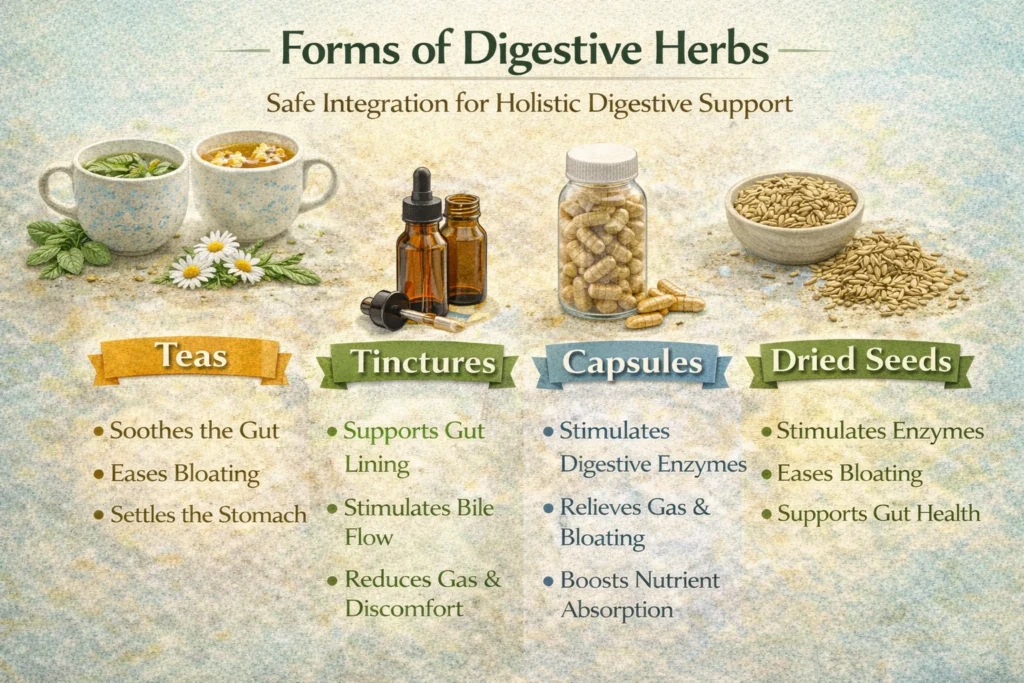
Digestive herbs are generally safe when used as teas, tinctures, or small doses of supplements. Start slowly to monitor your body’s response and avoid combining multiple strong herbs simultaneously. Hydration, balanced meals, and mindful eating enhance the effectiveness of these herbs.
Pregnant or breastfeeding women, people with chronic illnesses, or those taking medications should consult healthcare professionals before using concentrated herbal extracts.

Integrating Digestive Herbs Into Daily Life
For beginners, incorporating herbs into daily routines can be simple. Start with a morning or post-meal tea containing ginger or chamomile. Peppermint or fennel can be used after heavier meals. For more targeted support, standardized capsules or tinctures may be introduced, always respecting recommended dosages.
Regular use of digestive herbs can improve nutrient absorption, reduce discomfort, and promote a more balanced microbiome. Over time, these practices contribute to overall gut health and general wellness.
Scientific Evidence Supporting Digestive Herbs
Several studies have highlighted the effectiveness of these herbs:
Ginger: Research shows ginger reduces nausea and improves gastric emptying in both healthy individuals and patients with gastrointestinal disorders.
Peppermint: Clinical trials indicate peppermint oil capsules can significantly reduce abdominal pain and bloating in irritable bowel syndrome patients.
Chamomile: Studies suggest chamomile has anti-inflammatory effects that soothe gastrointestinal irritation and may protect against ulcers.
Fennel: Fennel seed extract has been shown to reduce colic in infants and relieve bloating in adults.
Licorice Root (DGL): Evidence supports its use in protecting the gastric mucosa and reducing acid-related discomfort.
Conclusion: Herbs as Allies for Digestive Health
Digestive discomfort does not have to be a daily burden. Herbs for digestion offer natural, gentle, and evidence-based support for bloating, gas, indigestion, and overall gut health.
By choosing safe herbs like ginger, peppermint, chamomile, fennel, and licorice root, and incorporating them thoughtfully into daily routines, individuals can support digestive balance, enhance nutrient absorption, and improve overall comfort.
As always, moderation, quality, and attention to personal response are key. When used responsibly, digestive herbs become powerful allies for a healthier, more comfortable gut.
Scientific References
- Micklefield, G. (2006). Herbal therapies for gastrointestinal disorders: Efficacy and mechanisms. Phytotherapy Research, 20(7), 543–551.
- Lete, I., & Allué, J. (2016). The effectiveness of ginger in the prevention of nausea and vomiting during pregnancy and chemotherapy. Integrative Medicine Insights, 11, 11–17.
- Pittler, M. H., & Ernst, E. (1998). Peppermint oil for irritable bowel syndrome: A systematic review and meta-analysis. British Journal of Clinical Pharmacology, 46(6), 555–565.
- McKay, D. L., & Blumberg, J. B. (2006). A review of the bioactivity and potential health benefits of chamomile tea (Matricaria recutita L.). Phytotherapy Research, 20(7), 519–530.
- Gupta, R., & Sharma, S. (2014). Fennel (Foeniculum vulgare Mill.) in gastrointestinal disorders: Evidence-based review. Journal of Evidence-Based Complementary & Alternative Medicine, 19(4), 261–269.




Aw, this was a very good post. Finding the time and actual effort to generate a good article… but
what can I say… I procrastinate a whole lot and don’t seem
to get nearly anything done.