Digestive discomfort, bloating, irregular bowel movements, and poor nutrient absorption are common issues in modern life. Factors like stress, poor diet, medications, and sedentary habits contribute to digestive imbalance.
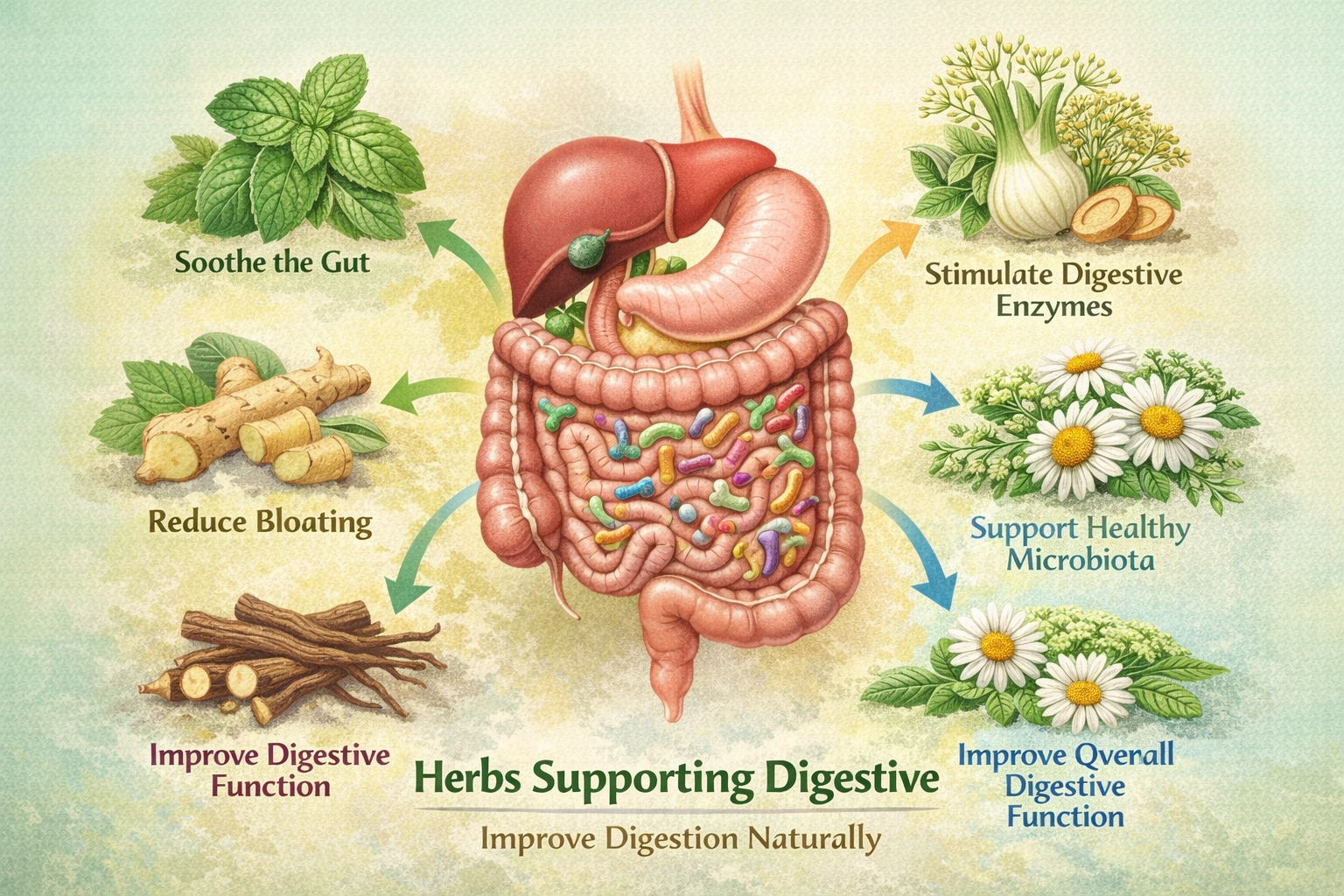
Herbs for digestive health offer a safe, natural, and effective way to support gut function. These herbs help regulate digestive enzymes, soothe gastrointestinal tissues, enhance nutrient absorption, and promote a healthy gut microbiome. By using herbal remedies, it is possible to maintain smooth digestion, reduce bloating, and improve overall gastrointestinal health.
In this article, we explore the most effective herbs for digestive health, their mechanisms, scientific evidence, practical usage, and how to incorporate them into daily life for optimal gut function.
How Digestion Works and Why Herbal Support Matters
The digestive system breaks down food, absorbs nutrients, and eliminates waste. Proper function requires balanced enzyme activity, healthy gut flora, and optimal gut lining integrity.
Digestive herbs assist by:
- Stimulating digestive enzymes for more efficient nutrient breakdown.
- Reducing inflammation in the gut lining, which improves nutrient absorption.
- Supporting healthy gut bacteria that aid digestion and immunity.
- Alleviating gas, bloating, and discomfort through carminative properties.
By enhancing these processes, herbal support promotes better digestion, energy, and overall wellness.
Common Digestive Issues and How Herbs Help
Digestive issues often arise due to lifestyle, diet, and stress. Common symptoms include bloating, gas, indigestion, constipation, and irregular bowel movements.
Herbs can help by:
- Reducing inflammation: Anti-inflammatory compounds in herbs like turmeric and chamomile protect the gut lining.
- Stimulating digestion: Herbs such as ginger, peppermint, and fennel promote enzyme secretion and peristalsis.
- Balancing gut microbiota: Prebiotic compounds in licorice root and chamomile encourage healthy bacterial growth.
- Alleviating discomfort: Carminative herbs reduce gas, bloating, and abdominal discomfort.
Herbal support complements dietary and lifestyle measures to maintain digestive health and comfort.
Key Herbs for Digestive Health
Peppermint
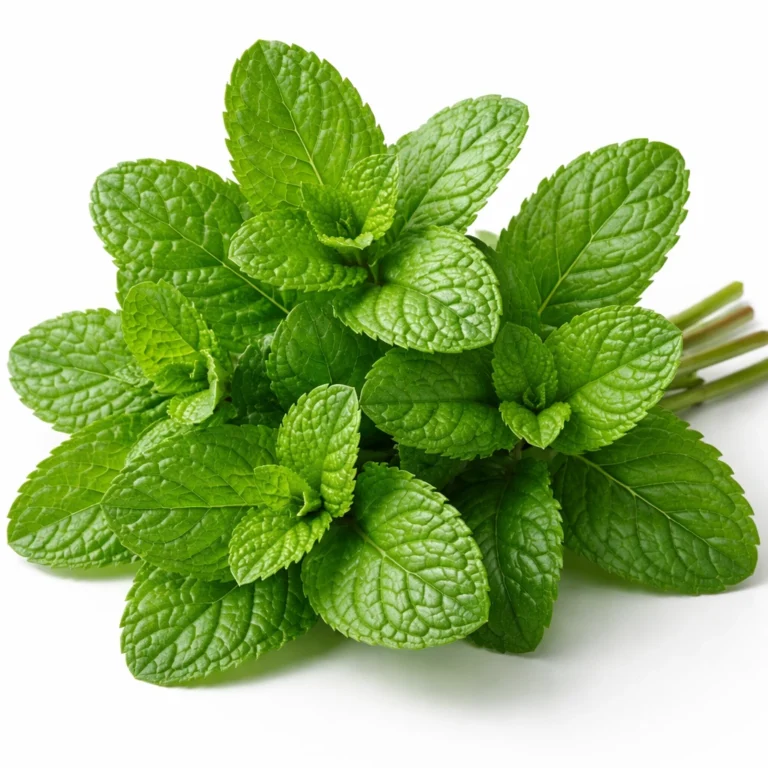
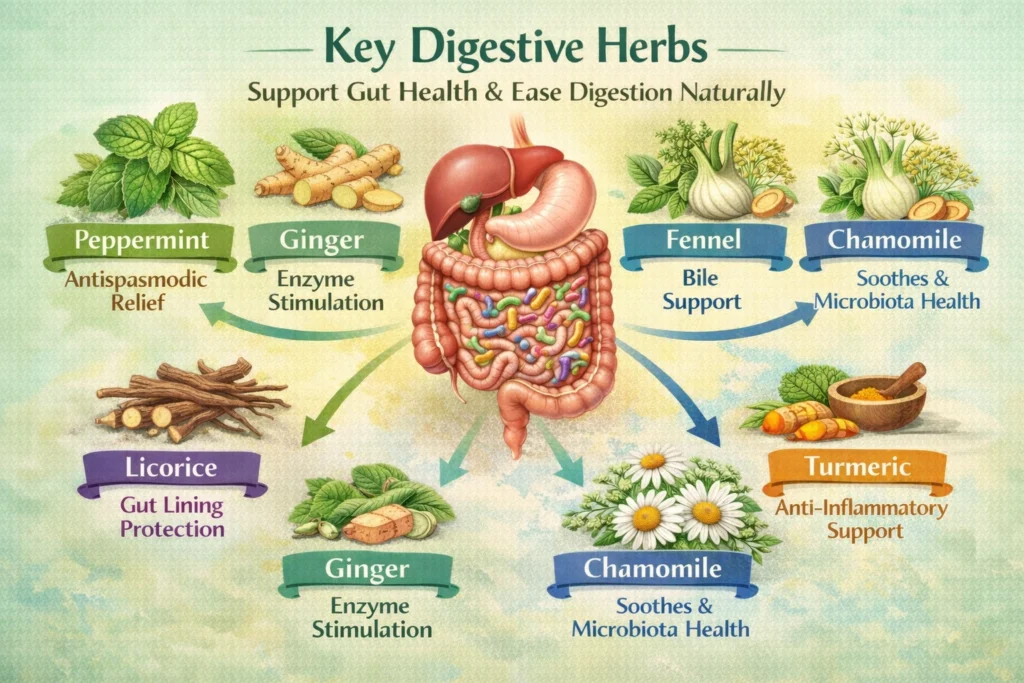
Peppermint (Mentha piperita) has carminative and antispasmodic properties. It relaxes gastrointestinal muscles, reduces bloating and gas, and promotes smooth digestion. Peppermint oil has been shown to alleviate symptoms of irritable bowel syndrome and digestive discomfort.
Ginger
Ginger (Zingiber officinale) enhances digestion by stimulating gastric motility and enzyme secretion. It reduces nausea, gas, and bloating while providing anti-inflammatory and antioxidant support to the gastrointestinal tract.
Fennel
Fennel seeds improve digestion by promoting bile secretion and relieving bloating. They also have mild antispasmodic properties and support gut microbiota, reducing discomfort from gas and indigestion.
Chamomile
Chamomile (Matricaria chamomilla) soothes the digestive tract, reduces inflammation, and supports smooth muscle relaxation. It helps alleviate gas, cramping, and indigestion while promoting gut health through its mild antimicrobial and prebiotic effects.
Licorice Root
Licorice (Glycyrrhiza glabra) protects the gut lining, reduces inflammation, and supports healthy microbiota. It helps manage gastritis, reflux, and general digestive discomfort, providing gentle support for overall gastrointestinal health.
Turmeric
Turmeric (Curcuma longa) contains curcumin, which has potent anti-inflammatory properties. It supports gut lining integrity, reduces digestive inflammation, and promotes nutrient absorption for improved digestive health.

Mechanisms Behind Herbal Digestive Support
Herbs improve digestion through multiple mechanisms:
Enzyme stimulation: Ginger and fennel enhance secretion of digestive enzymes, facilitating better nutrient breakdown.
Muscle relaxation: Peppermint and chamomile reduce gastrointestinal spasms, alleviating bloating and cramps.
Anti-inflammatory effects: Turmeric, chamomile, and licorice reduce inflammation in the digestive tract.
Gut microbiome support: Prebiotic compounds in chamomile and licorice foster healthy bacterial growth, improving digestion and immunity.
Carminative action: Herbs reduce gas formation and discomfort, promoting smoother digestion and comfort.
Practical Ways to Use Digestive Herbs
Herbs can be integrated safely into daily routines:
Teas and infusions: Peppermint, chamomile, and fennel teas soothe the digestive tract and promote smooth digestion.
Tinctures and extracts: Concentrated forms of ginger, licorice, and turmeric provide potent digestive support.
Powders: Ginger and turmeric powders can be added to meals, smoothies, or soups for daily use.
Capsules: Standardized herbal extracts ensure consistent dosing and convenience for digestive support.
Incorporating herbs alongside a balanced diet, adequate hydration, and mindful eating enhances their effectiveness.

Lifestyle Strategies to Complement Herbal Digestive Support
Herbal support works best when combined with healthy lifestyle practices:
- Balanced diet: Include fiber-rich fruits, vegetables, and whole grains to support digestion.
- Hydration: Adequate water intake promotes smooth bowel movements and nutrient transport.
- Mindful eating: Chewing thoroughly and eating slowly supports enzymatic digestion.
- Regular exercise: Moderate physical activity enhances gut motility and circulation.
- Stress management: Reducing stress through meditation or mindfulness prevents stress-related digestive disturbances.
Combining herbs with these strategies promotes optimal gut function and digestive comfort.

Scientific Evidence Supporting Digestive Herbs
Research confirms the effectiveness of these herbs for digestive health:
- Peppermint: Reduces irritable bowel syndrome symptoms and gastrointestinal discomfort (Kline et al., 2001).
- Ginger: Improves gastric motility, reduces nausea, and alleviates bloating (Borrelli et al., 2005).
- Fennel: Promotes digestion, relieves gas, and improves gut microbiota (Cai et al., 2019).
- Chamomile: Soothes inflammation, supports gut lining, and reduces gastrointestinal discomfort (McKay & Blumberg, 2006).
- Licorice Root: Protects gut lining, reduces gastritis symptoms, and supports healthy microbiota (Isbrucker & Burdock, 2006).
- Turmeric: Anti-inflammatory and antioxidant effects support gut health (Hewlings & Kalman, 2017).
These studies provide evidence that herbs are safe, natural, and effective for digestive support.
Conclusion: Support Digestive Health Naturally with Herbs
Herbs for digestive health provide a safe and effective way to improve digestion, reduce bloating, and support gut wellness. By integrating peppermint, ginger, fennel, chamomile, licorice root, and turmeric into daily routines alongside a balanced diet, hydration, mindful eating, exercise, and stress management, individuals can achieve optimal digestive function and overall wellness.
Moderation, high-quality herbs, and personal observation are key for safe and effective use. Herbal digestive support is a holistic, natural approach to maintaining a healthy gut and enhancing quality of life.
Scientific References
- Kline, R. M., et al. (2001). Peppermint oil for irritable bowel syndrome: A randomized controlled trial. American Journal of Gastroenterology, 96(3), 981–987.
- Borrelli, F., et al. (2005). Effectiveness of ginger in the prevention of nausea and vomiting in patients with motion sickness and pregnancy. Nutrition Research, 25(5), 369–379.
- Cai, L., et al. (2019). Fennel (Foeniculum vulgare) seed extracts: Traditional use, phytochemistry, and pharmacology. Journal of Ethnopharmacology, 242, 112039.
- McKay, D. L., & Blumberg, J. B. (2006). A review of the bioactivity and potential health benefits of chamomile tea (Matricaria recutita L.). Phytotherapy Research, 20(7), 519–530.
- Isbrucker, R. A., & Burdock, G. A. (2006). Risk and safety assessment on the consumption of Licorice root (Glycyrrhiza sp.), its extract, and powder as a food ingredient, with emphasis on the pharmacology and toxicology of glycyrrhizin. Regulatory Toxicology and Pharmacology, 46(3), 167–192.
- Hewlings, S. J., & Kalman, D. S. (2017). Curcumin: A review of its effects on human health. Foods, 6(10), 92.