Feeling sluggish, fatigued, or low on energy is a common issue in modern life. Busy schedules, poor sleep, stress, and nutrient deficiencies all contribute to reduced vitality. While caffeine or energy drinks may offer temporary boosts, they often lead to crashes and dependency.
Herbs for energy provide a natural, sustainable alternative. Many plants contain bioactive compounds that improve alertness, reduce fatigue, enhance stamina, and support the body’s adaptive stress response. From ginseng and ashwagandha to rhodiola and eleuthero, herbal remedies have been used for centuries across cultures to restore vigor and vitality.
This article explores herbs for energy, explaining how they work, their benefits, safe usage, and how to integrate them into daily routines. By the end, readers will understand how to boost energy naturally without relying on stimulants.
How Herbs Boost Energy Naturally
Herbs support energy in multiple ways. Some act directly on the central nervous system, enhancing alertness and cognitive function. Others improve blood circulation, oxygen utilization, or metabolism, leading to increased physical stamina. Certain adaptogenic herbs help the body cope with stress, indirectly reducing fatigue by supporting adrenal and hormonal balance.
Unlike synthetic stimulants, which create temporary spikes followed by crashes, herbal energy boosters are usually gentler and sustainable. They work in harmony with the body, gradually enhancing endurance, mental focus, and physical performance.
Common Causes of Fatigue and How Herbs Help
Fatigue can arise from multiple factors, including nutrient deficiencies, chronic stress, poor sleep, and lifestyle habits. Herbal remedies address these factors by:
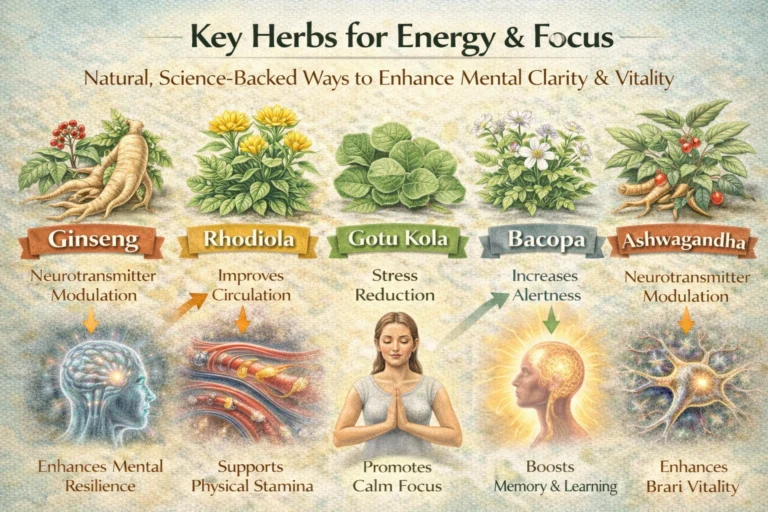
- Supporting stress adaptation: Adaptogenic herbs like ashwagandha and rhodiola modulate cortisol levels and reduce stress-related fatigue.
- Enhancing physical stamina: Ginseng and eleuthero improve oxygen utilization, circulation, and endurance.
- Improving cognitive focus: Herbs can stimulate alertness, memory, and mental clarity, reducing perceived fatigue.
- Supporting metabolism: Certain herbs help optimize blood sugar and energy metabolism, providing steady, sustained energy throughout the day.
Herbal energy support works best when combined with proper nutrition, hydration, sleep, and light physical activity.
Key Herbs for Energy and Vitality
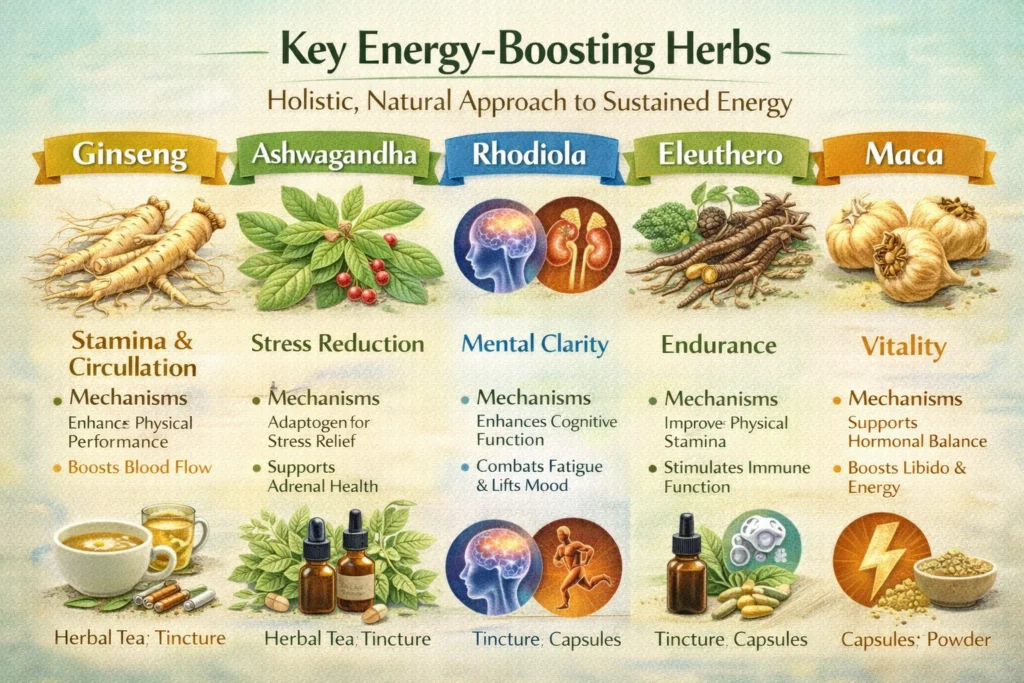
Ginseng
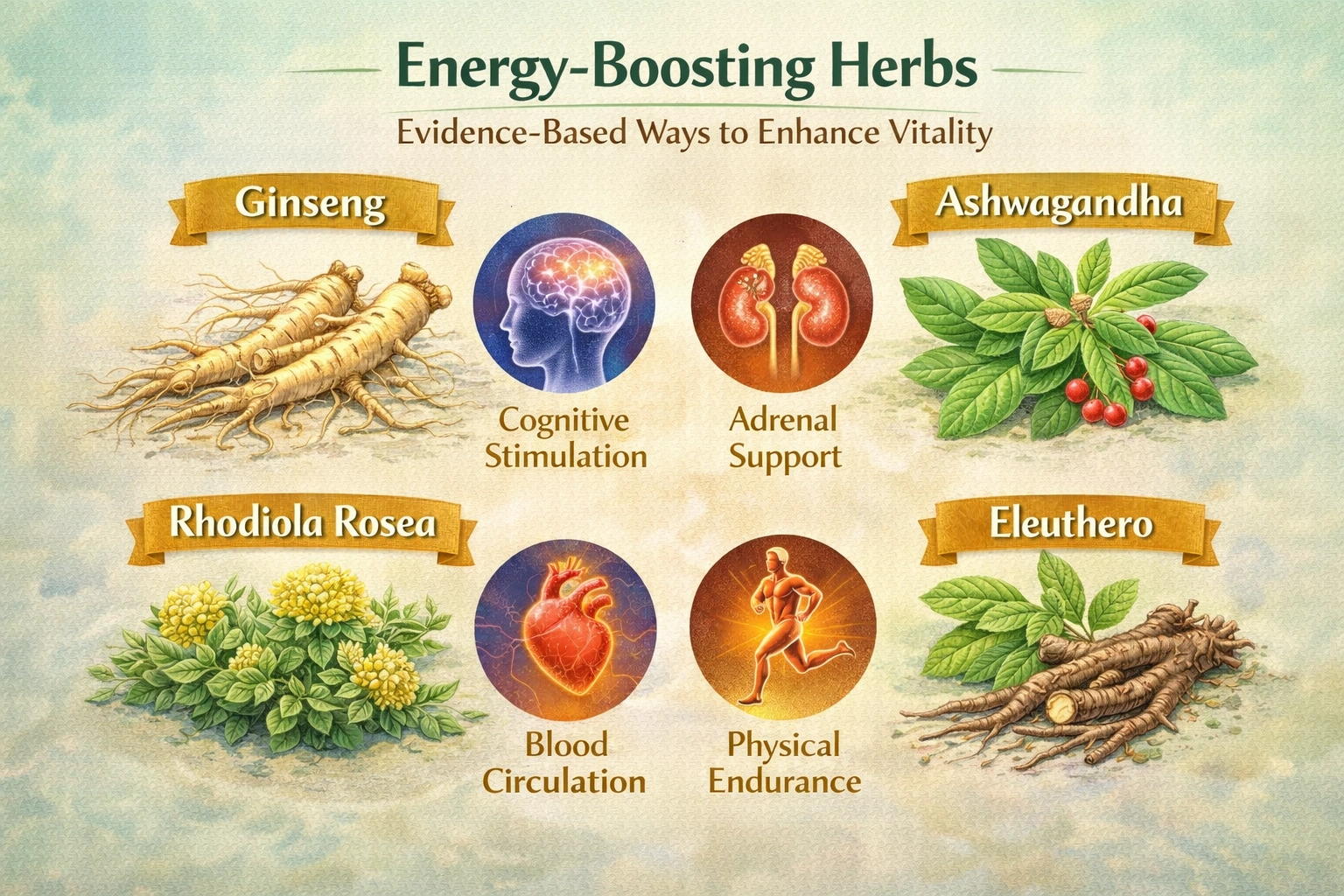
Ginseng, particularly Panax ginseng, is one of the most studied herbs for energy and vitality. Its active compounds, ginsenosides, influence the central nervous system, improve blood circulation, and enhance physical and mental stamina. Clinical trials show that ginseng can reduce fatigue, improve exercise performance, and enhance cognitive function.
Ashwagandha
Ashwagandha (Withania somnifera) is an adaptogenic herb that helps the body cope with stress and supports adrenal function. By modulating cortisol levels, it indirectly boosts energy, reduces mental fatigue, and promotes endurance. Ashwagandha is especially useful for people experiencing stress-related low energy.
Rhodiola Rosea
Rhodiola is a well-known adaptogen used to reduce fatigue, enhance mental clarity, and improve physical performance. Its bioactive compounds, rosavins and salidroside, support mitochondrial function and reduce oxidative stress, leading to increased stamina and reduced perceived exertion.
Eleuthero (Siberian Ginseng)
Eleuthero supports physical endurance and resilience by enhancing oxygen utilization, circulation, and energy metabolism. It is often used by athletes and those experiencing chronic fatigue to sustain energy levels without over-stimulation.
Maca Root
Maca is traditionally used to improve stamina, endurance, and vitality. Its adaptogenic and nutritional properties may support energy metabolism, hormonal balance, and overall resilience, particularly in physically demanding or stressful conditions.
Mechanisms Behind Herbal Energy Boosting
Herbs improve energy through several physiological mechanisms:
Adaptogenic Effects: Adaptogens like rhodiola and ashwagandha help normalize stress hormone levels, reducing mental fatigue and improving alertness.
Cognitive Stimulation: Ginseng and rhodiola influence neurotransmitter pathways, enhancing memory, focus, and reaction times.
Circulation and Oxygen Utilization: Eleuthero and ginseng improve blood flow and oxygen delivery to tissues, enhancing physical endurance.
Antioxidant Support: Herbs like rhodiola, ginseng, and maca protect cells from oxidative stress, which can otherwise contribute to fatigue and cellular dysfunction.
Hormonal Balance: Certain herbs support adrenal and thyroid function, optimizing energy metabolism and reducing fatigue associated with hormonal imbalance.
How to Use Energy Herbs Safely
While herbs for energy are generally safe, proper usage is essential. Start with low doses to assess tolerance, and avoid combining multiple strong adaptogens without guidance. Timing is important; many herbs are best taken in the morning or early afternoon to avoid interference with sleep.
People with chronic illnesses, high blood pressure, or those taking prescription medications should consult a healthcare professional before using concentrated herbal supplements.
Herbal teas, powders, tinctures, and capsules all provide viable options. Quality, standardization of active compounds, and third-party testing ensure both efficacy and safety.

Combining Herbal Energy Support With Lifestyle
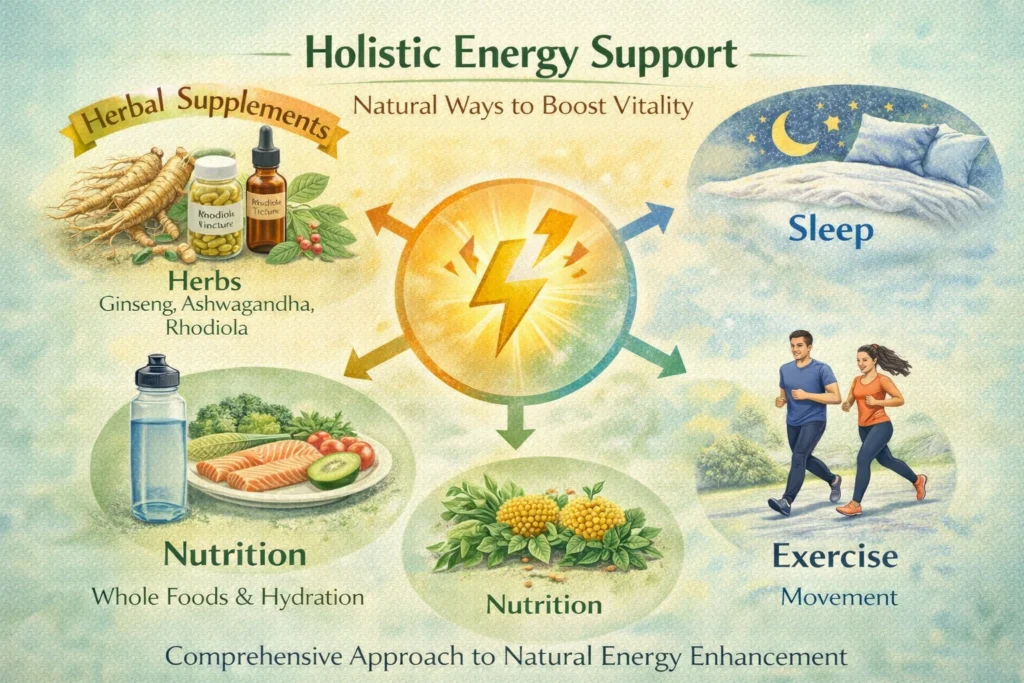
Herbal energy boosters are most effective when paired with supportive lifestyle habits:
- Nutrition: Balanced meals with adequate protein, complex carbs, and healthy fats provide sustained energy.
- Sleep: Quality sleep enhances cellular repair and restores natural energy levels.
- Hydration: Water is essential for nutrient transport, circulation, and metabolic processes.
- Physical Activity: Moderate exercise supports circulation, oxygen utilization, and stamina.
- Stress Management: Mindfulness, meditation, and relaxation reduce cortisol-related fatigue.
By integrating herbs with lifestyle optimization, individuals can achieve sustained vitality without dependence on stimulants or caffeine crashes.
Scientific Evidence Supporting Herbs for Energy
Research supports the use of several herbs for energy and vitality:
- Ginseng: Multiple studies show improved physical performance, reduced fatigue, and enhanced cognitive function in adults.
- Ashwagandha: Randomized trials demonstrate reduced cortisol levels, improved endurance, and enhanced mental focus.
- Rhodiola Rosea: Clinical evidence indicates reduced fatigue, enhanced mental clarity, and improved exercise performance.
- Eleuthero: Research shows increased stamina and reduced perception of fatigue during physical activity.
- Maca: Studies suggest enhanced endurance, improved mood, and hormonal balance contributing to sustained energy.
These findings support the inclusion of herbal energy boosters as part of a holistic vitality routine.
Conclusion: Harnessing Herbs for Natural Energy
Herbs for energy are powerful, natural allies for enhancing mental alertness, physical stamina, and overall vitality. By selecting safe, evidence-based options such as ginseng, ashwagandha, rhodiola, eleuthero, and maca, and combining them with supportive lifestyle habits, individuals can enjoy sustained energy without dependence on stimulants or quick fixes.
Responsibility and moderation are key. Start slowly, observe how your body responds, and choose high-quality, standardized products. Over time, herbal energy support can become a cornerstone of a balanced, vibrant life.
References
- Panossian, A., & Wikman, G. (2010). Effects of adaptogens on the central nervous system and the molecular mechanisms associated with their stress-protective activity. Pharmaceuticals, 3(1), 188–224.
- Kim, J. H., Yi, Y. S., Kim, M. Y., & Cho, J. Y. (2017). Role of ginseng in inflammatory responses and energy metabolism. Journal of Ginseng Research, 41(4), 435–443.
- Choudhary, D., Bhattacharyya, S., & Joshi, K. (2015). Body weight management in adults under chronic stress through Ashwagandha root extract: A double-blind, randomized, placebo-controlled trial. Journal of Evidence-Based Complementary & Alternative Medicine, 20(4), 280–289.
- Spasov, A. A., Wikman, G. K., Mandrikov, V. B., Mironova, I. A., & Neumoin, V. V. (2000). A double-blind, placebo-controlled pilot study of the stimulating and adaptogenic effect of Rhodiola rosea SHR-5 extract on the fatigue of students during an examination period with a repeated low-dose regimen. Phytomedicine, 7(2), 85–89.
- Gonzales, G. F., & Gonzales, C. (2014). Effect of Lepidium meyenii (maca) on sexual desire and energy in healthy adults: Systematic review. BMC Complementary and Alternative Medicine, 14, 289.